
Most companies do not have an outreach problem.
They have a preparation problem.
They send more emails, make more calls, add more leads, and try new tools. Still, their calendars do not fill up with the right conversations.
This happens because qualified meetings are not just created when someone replies or answers the phone. They actually start before the campaign begins.
It all starts with having the right audience, message, CRM setup, follow-up process, and a team that executes consistently.
Here’s what you need to do before your outreach can start booking qualified meetings.
1. You Need to Know Exactly Who You Are Targeting
Before you launch any outreach campaign, you need a clear Ideal Customer Profile.
Not just “B2B companies.
Not just “business owners.
Not just “companies that need more leads.
You should know which companies are most likely to need your solution, have the budget, and feel enough urgency to take a meeting.
This means defining details such as industry, company size, revenue range, location, decision-maker titles, current pain points, growth stage, and existing tools or CRM.
If you skip this step, your team will contact people who are not a good fit. This leads to low reply rates, weak conversations, and wasted time.
The more accurate your targeting, the better your outreach will perform.
2. Your Lead List Needs to Be Built for Quality, Not Just Volume
A big lead list might look impressive, but just having more names does not create qualified meetings.
A list of 10,000 poorly matched contacts will not do better than a smaller list of well-researched, high-fit prospects.
Before you start outreach, review your lead list for company fit, decision-maker accuracy, valid contact info, industry relevance, duplicate records, bad data, and missing CRM fields.
This matters because your outreach is only as good as the data you use.
If your list is messy, your emails will feel generic, your calls will lack context, follow-up will be harder to manage, and your CRM will be less reliable.
A strong lead list gives your team a better starting point and makes every message, call, and follow-up feel more relevant to each person.
3. Your Message Needs to Speak to the Prospect’s Real Problem.
Many outreach campaigns fail because the message focuses too much on the company sending it.They talk about their service, features, tools, or offer.
But prospects care more about their own problems. They ask themselves:
“Why should I care?”
“Is this relevant to me?”
“Does this solve a problem I actually have?”
“Is this worth my time right now?”
Before you launch outreach, your message should connect with your audience’s specific pain points.
Instead of saying, “We provide AI-powered lead generation and offshore SDR support,” try a message like:
“Many growing B2B teams have the tools and lead lists, but still struggle to turn outreach into qualified meetings. We help fix the process behind that.”
The second message works better because it starts with what the prospect is experiencing.
Good outreach does more than explain what you do. It makes the prospect feel understood.
4. Your CRM Needs to Be Ready Before the Campaign Starts
Outreach should not be managed in spreadsheets, inboxes, or disconnected tools.
If your CRM is not ready before the campaign starts, follow-up will be inconsistent and you will have less visibility. Your CRM should be set up to track new leads, contact status, outreach activity, replies, calls, follow-up tasks, meetings booked, lead source, campaign performance, and next steps.
This helps your team answer important questions:
Which campaign is creating replies?
Which audience is booking the most meetings?
Which leads need follow-up today?
Where are opportunities being lost?
A CRM should do more than store contacts. It should help guide your actions.
5. Your Follow-Up Process Needs to Be Built Before Anyone Replies
Many teams believe follow-up starts only after someone responds. You should plan your follow-up before you send the first message is sent. Most prospects will not respond to the first touchpoint. They may need multiple emails, calls, LinkedIn touches, or reminders before they engage.
Before outreach starts, your team should know how many follow-ups will happen, when each one will happen, which channels will be used, who owns each step, what happens after a reply, and what happens if the prospect is interested but not ready yet.
A strong follow-up process keeps leads from going cold and stops your team from relying on memory, manual reminders, or random actions.
Consistent follow-up is one of the main differences between outreach that just creates activity and outreach that leads to qualified meetings.
6. Your SDRs Need Direction, Not Just a Script
A script can help, but it is not enough on its own. context.
They should understand who they are contacting, why that company matters, what pain points to look for, and what makes someone qualified for a meeting. Before outreach starts, SDRs should be trained on the target audience, common objections, qualification criteria, call positioning, follow-up expectations, CRM updates, and the meeting handoff process.
Without this, SDRs might book meetings that look good on paper but do not lead to real opportunities.
The goal is not just to have more meetings.
The goal is to have better conversations with the right people.
7. AI Should Support the Process, Not Replace the Strategy
AI can help make outreach faster, smarter, and more personalized.
But AI is not a shortcut if your targeting is unclear or your messaging is weak.
AI can help with prospect research, pain point identification, message personalization, lead prioritization, CRM updates, follow-up reminders, and performance insights.
AI works best when it is part of a clear process.
If your strategy is weak, AI will just help you scale weak outreach more quickly.
The right approach is to combine AI speed with human judgment. AI can help gather insights and automate repetitive work. Trained people can validate, personalize, call, follow up, and guide the conversation.
This combination is what turns outreach into a real growth engine.
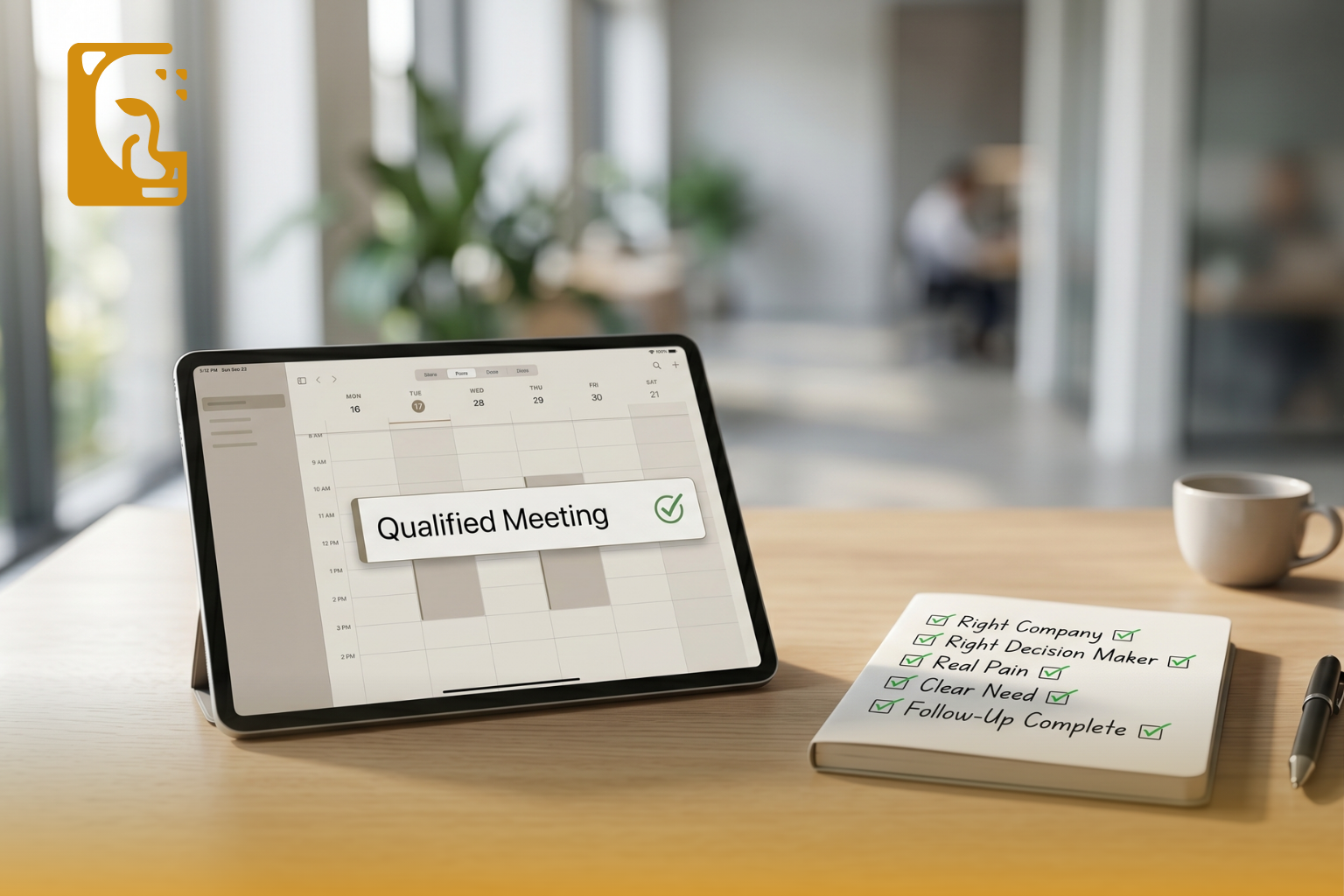
8. You Need to Define What a Qualified Meeting Actually Means
Not every booked meeting is a good meeting.
Before you start outreach, your team should agree on what qualifies someone for a sales conversation.
This might include company size, industry fit, revenue range, decision-making role, current pain, timeline, budget potential, CRM challenges, and interest level.
This keeps your team from celebrating volume over quality.
Booking 30 meetings with poor-fit companies creates more work but not more revenue. Booking 10 meetings with strong-fit prospects is often much more valuable.
You should define success clearly before the campaign launches.
The Sales Leopard Take
Before your outreach can create real results, you need more than just a contact list and a sequence.
You need a clear ICP, a quality lead list, relevant messaging, CRM visibility, a structured follow-up process, trained SDRs, smart AI support, and a shared definition of a qualified meeting.
When any of these pieces are missing, outreach becomes random.
When all of these pieces work together, outreach becomes predictable.
Sales Leopard helps B2B companies build an automated lead generation system that combines AI-powered research, CRM-integrated workflows, and trained offshore SDRs to turn targeted outreach into qualified meetings.
AI brings speed.
People bring direction.
Process creates consistency.
These are the steps you need to take before your outreach can start booking the right meetings.
Ready to Build a Smarter Outreach Process?
If your team is sending emails, making calls, and adding leads to the CRM but still not booking enough qualified meetings, the problem might not be effort.
It could be the system behind the effort.
Book a consultation and let’s plan what needs to happen before your next outreach campaign launches.
Leave a Reply